


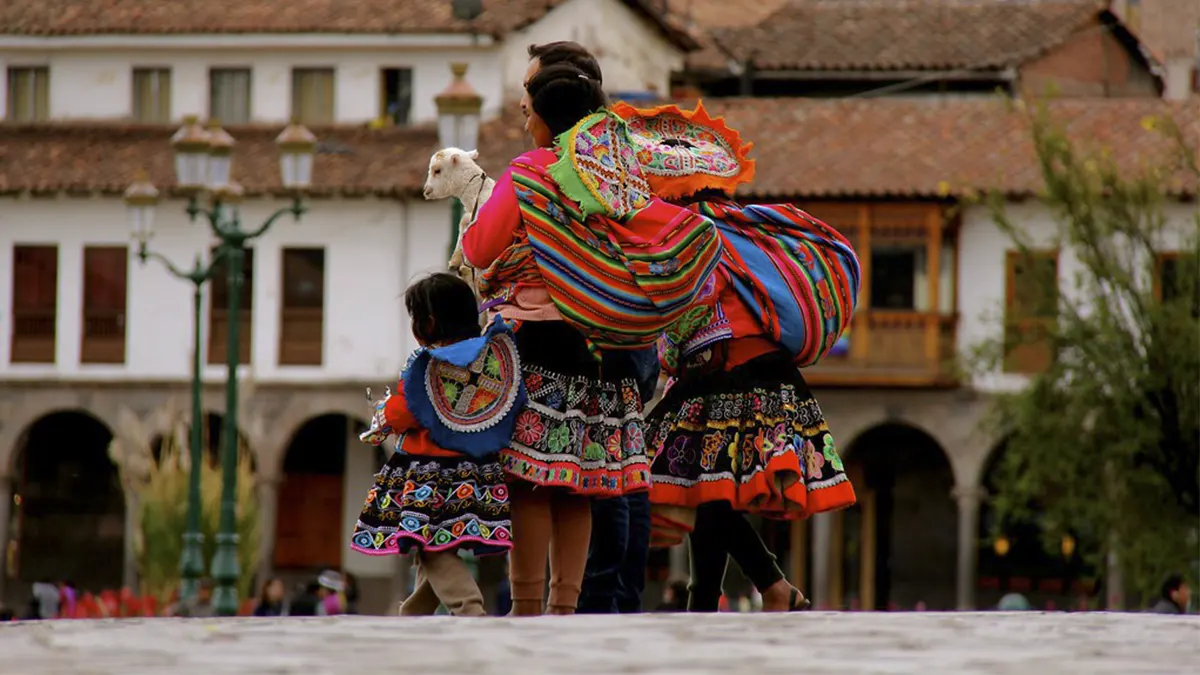
Traditional clothing in Peru reflects the country’s remarkable cultural and geographical diversity. Among its many regional traditions, Andean garments stand out for their vibrant colors, intricate weaving techniques, and deep connections to the history and identity of local communities. This guide explores the most representative pieces, their cultural significance, regional differences, and where to discover them during your trip to Peru.
Explore Traditional Peruvian Clothing
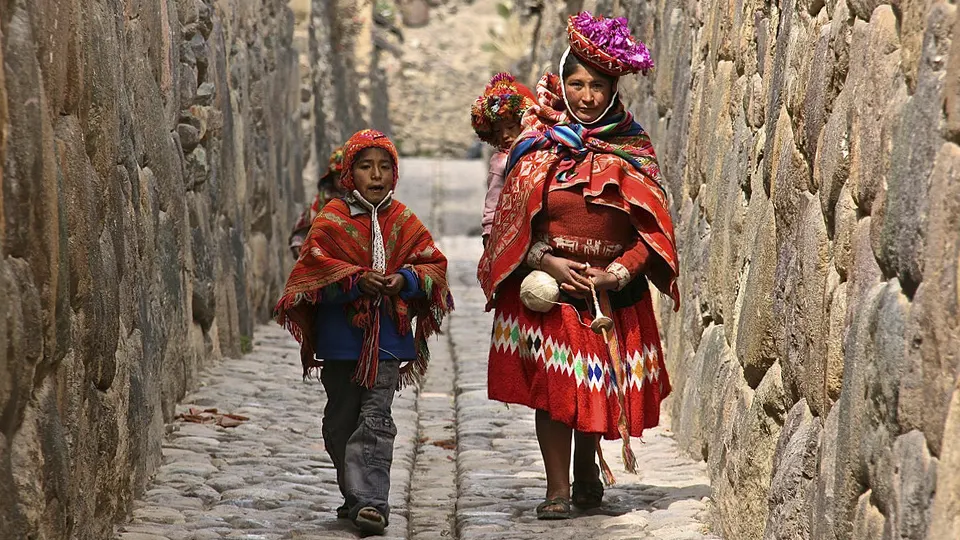
Traditional Peruvian clothing encompasses garments and textile traditions shaped by the country’s different regions and cultural communities. The materials vary according to local resources and climate. In the Andes, for example, alpaca, llama, and sheep’s wool are commonly used to create warm garments and intricate textiles. Many weaving techniques and designs have been passed down through generations, preserving an important part of Peru’s cultural heritage.
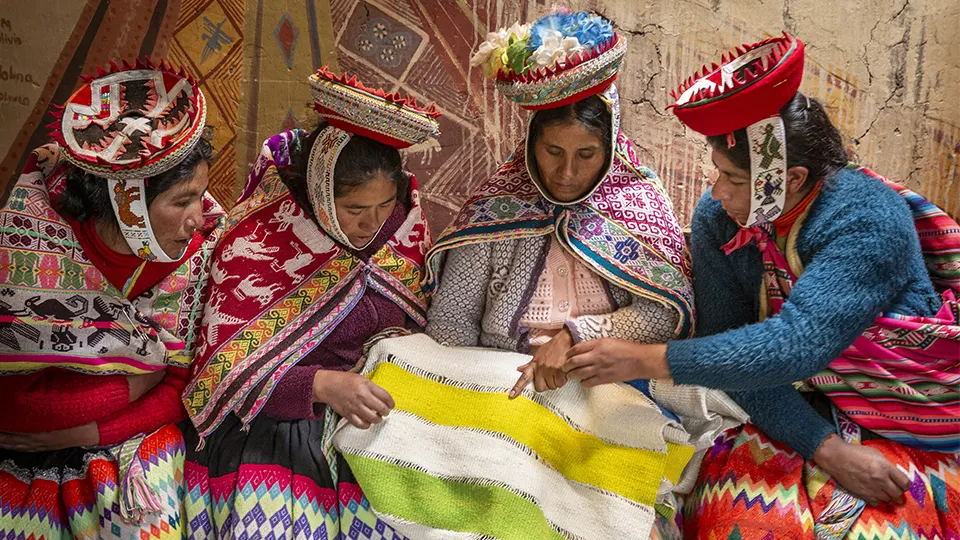
Andean women’s traditional clothing varies from one community to another, but it often includes colorful layered skirts, woven shawls, fitted jackets, and distinctive hats. Beyond their practical functions, these garments reflect local identity, craftsmanship, and regional traditions. Some of the most recognizable pieces include:
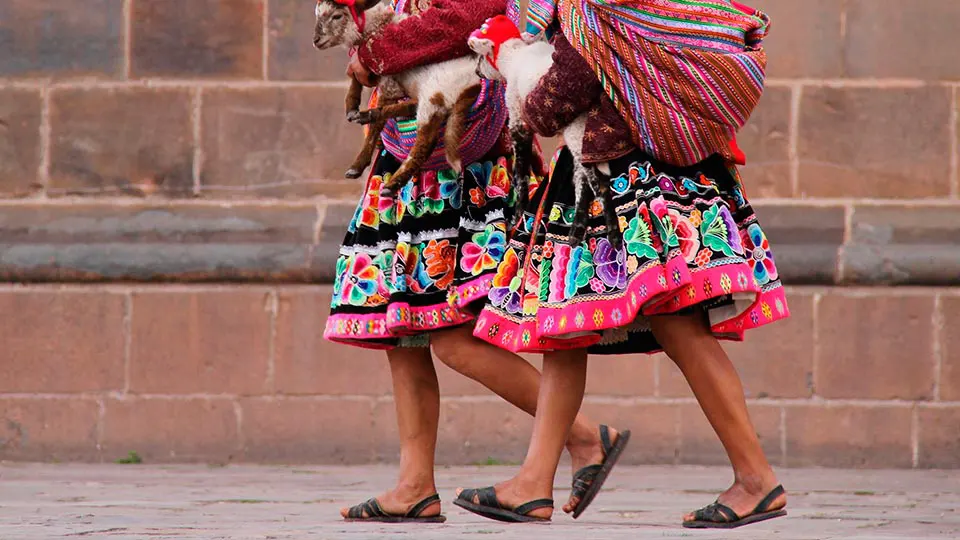
The pollera is one of the most iconic garments of this style of traditional dress, particularly among Peruvian women. It is a full, wide skirt, typically constructed from several layers and made of wool or other fabrics. To achieve a voluminous look, women often wear multiple skirts layered on top of one another.
Polleras are often distinguished by their vivid colors, embroidered details, and decorative patterns, which can vary considerably between communities. They are worn in everyday settings as well as during traditional dances, cultural celebrations, and other festivals in Peru.
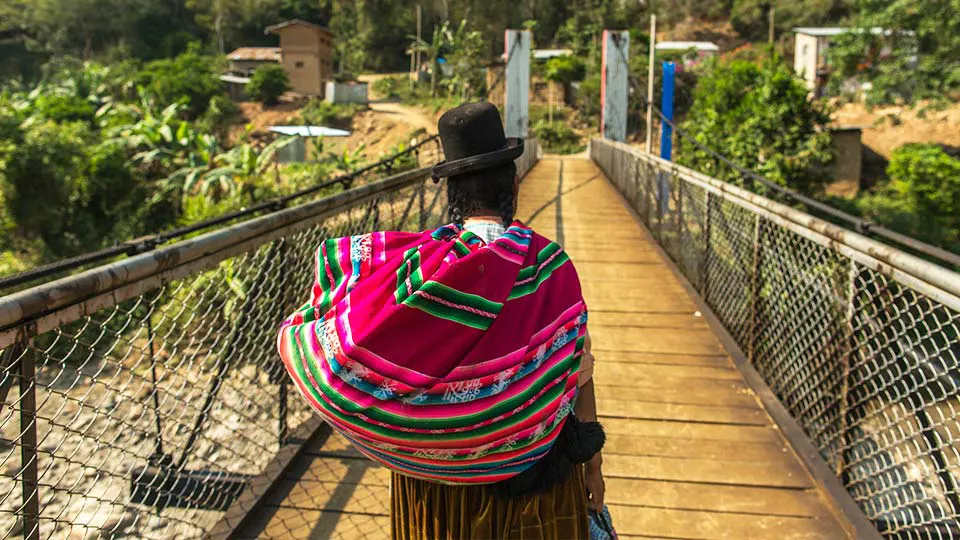
The lliclla, also spelled lliklla, is a rectangular woven shawl worn by Andean women over their shoulders. Beyond providing warmth, the lliclla is traditionally used to carry babies, food, and other everyday belongings.
These textiles often feature distinctive combinations of colors and patterns that reflect local traditions. In communities such as those of the Uros people of Lake Titicaca, women continue to produce a variety of handmade textiles, including woven blankets, bags, chuspas, and belts. These crafts help preserve traditional knowledge while supporting local livelihoods.
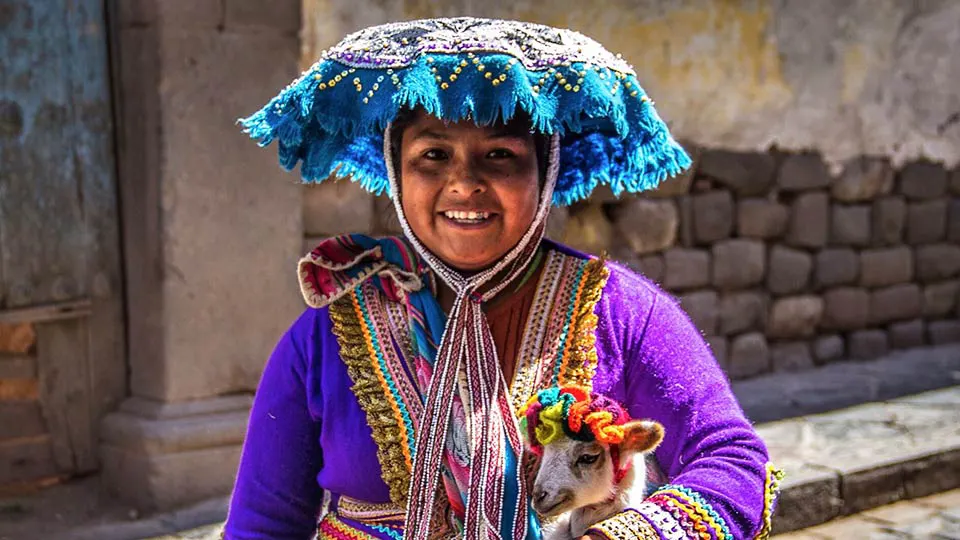
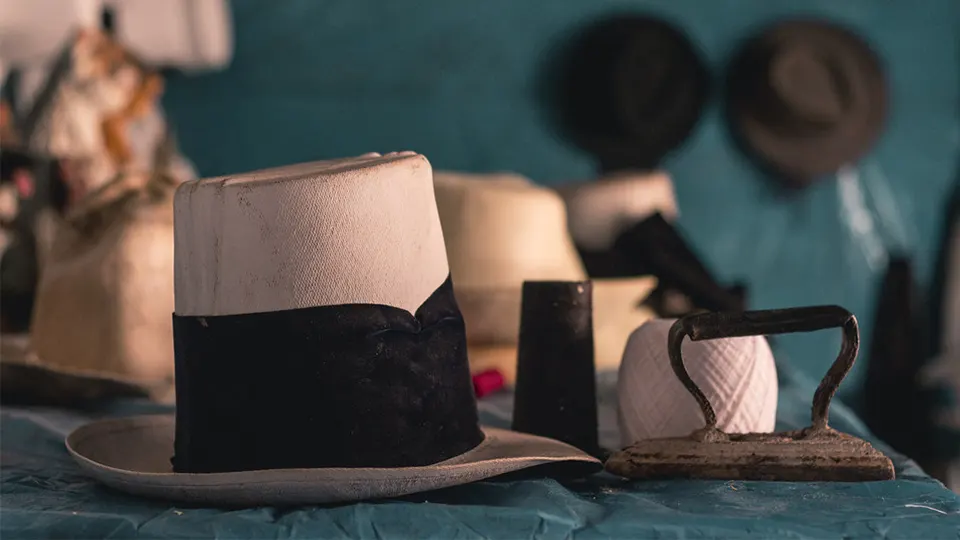
The montera is a traditional Andean hat found in different communities across Peru. Although it is commonly associated with women’s attire in some regions, its use and design vary according to local customs. Monteras vary widely in shape, size, and decoration depending on the Andean community where they are worn. Some feature rounded crowns, while others have flatter silhouettes and distinctive ornamental details.
They may feature colorful ribbons, embroidery, beads, and other handcrafted details. In places such as Cusco and the Sacred Valley, the shape, colors, and decorations of a montera may reflect the wearer’s community and regional identity.
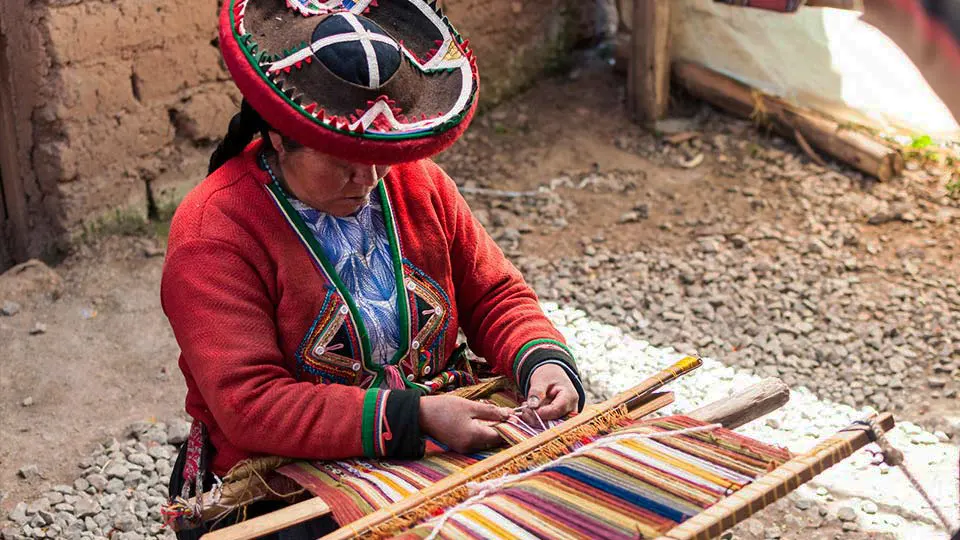
The jobona is a traditional, fitted jacket worn by women in some Andean communities. It is generally made of wool and decorated with colorful embroidery, particularly on the sleeves, collar, and front.
The chumpi is a traditional woven belt used to secure garments around the waist. Often decorated with geometric patterns and distinctive color combinations, it is an important element of Andean textile traditions. Although it may appear to be a simple accessory, the chumpi plays an important role in traditional Andean dress. It is worn in everyday settings and during cultural celebrations, including events such as the Inti Raymi festival.
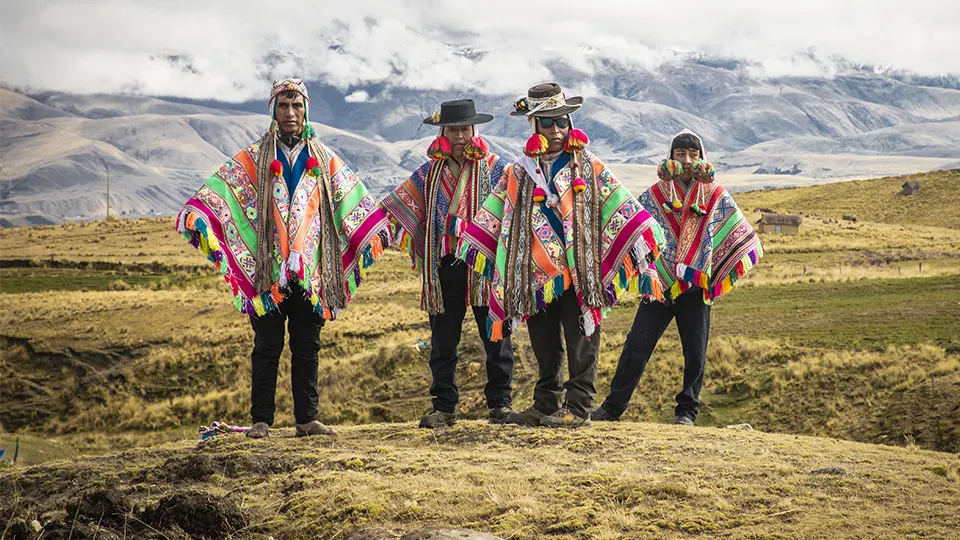
Traditional clothing worn by Andean men reflects the region’s climate, cultural heritage, and local customs. Many garments are made from wool and other insulating fibers to provide warmth in the mountains, while their colors and patterns often vary between communities. Below are some of the most notable garments:
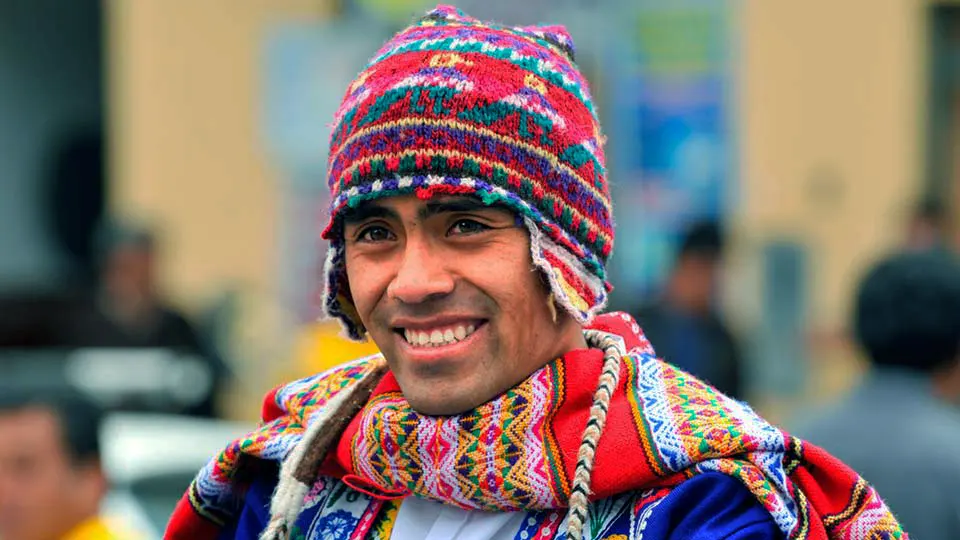
The chullo is a typical knitted cap with earflaps, typically made from alpaca, llama, or sheep’s wool. It is especially popular in the Peruvian Andes, where temperatures can drop significantly, particularly at night. Chullos often feature colorful geometric patterns, decorative tassels, and earflaps that provide extra protection against the wind and cold.
Each community may have its own distinct styles, colors, and designs, making the chullo both a functional garment and a cultural symbol. Today, chullos are also popular among travelers visiting Peru. Their distinctive patterns and regional variations make them a popular textile souvenir to buy among travelers visiting Peru.
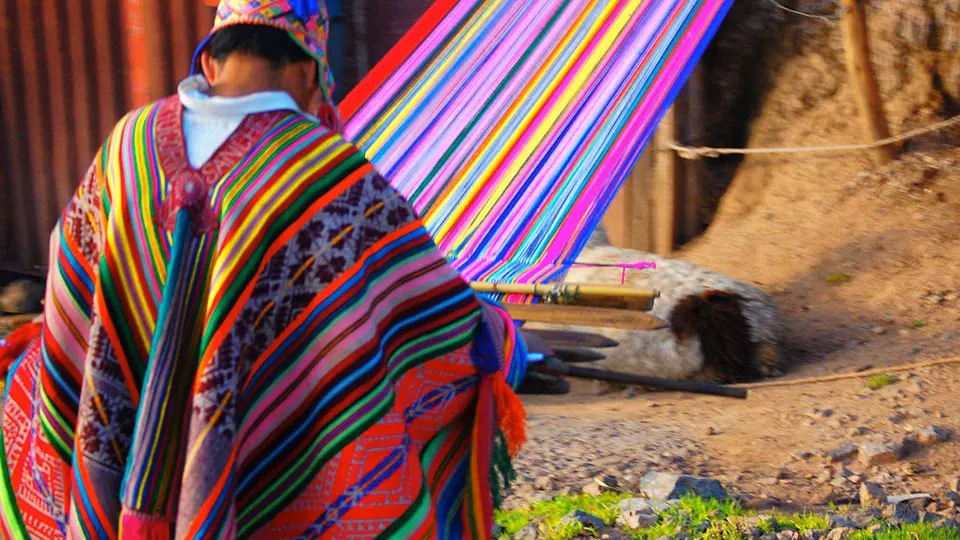
The poncho is a distinctive piece of traditional Andean clothing, widely recognized for its simple construction and regional variations. It consists of a large piece of woven fabric, typically rectangular or square, with an opening in the center for the head. Traditionally made of wool, it provides excellent protection against cold and wind.
In Peru, ponchos vary in their characteristics depending on the region. Some are predominantly red, while others feature dark backgrounds accented by colorful stripes and geometric patterns. In Cusco communities, people often wear ponchos during festivities, agricultural celebrations, and other significant cultural events.
The chuspa is a small woven bag traditionally used to carry coca leaves and other personal belongings. It is often made from wool and decorated with colorful geometric patterns. Both men and women use these bags in different Andean communities, where coca leaves have long-standing ceremonial, social, and cultural significance.
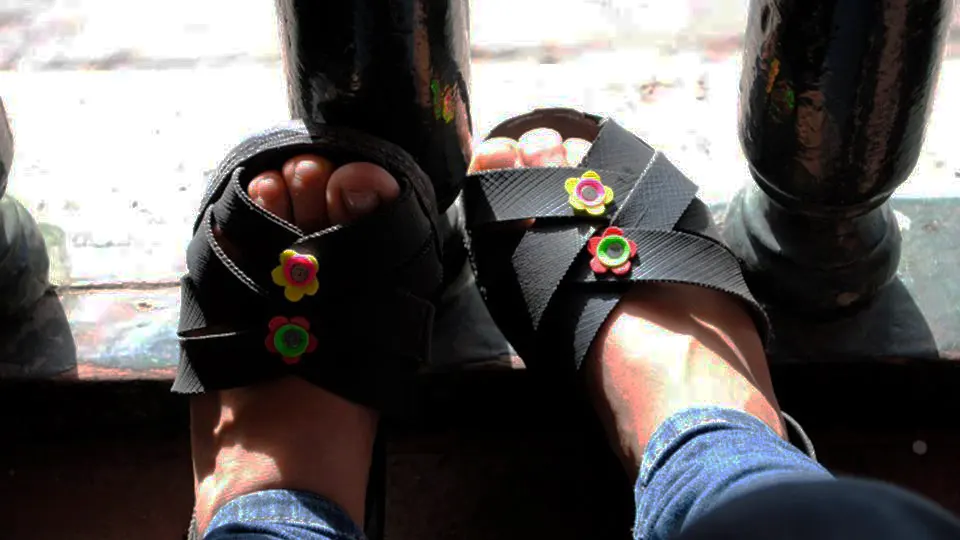
Ojotas are traditional sandals worn by men and women in various Andean communities. Although older versions were made from natural materials, many contemporary designs use recycled rubber, including repurposed tire soles. Their construction reflects the practical adaptation of everyday footwear to local conditions.
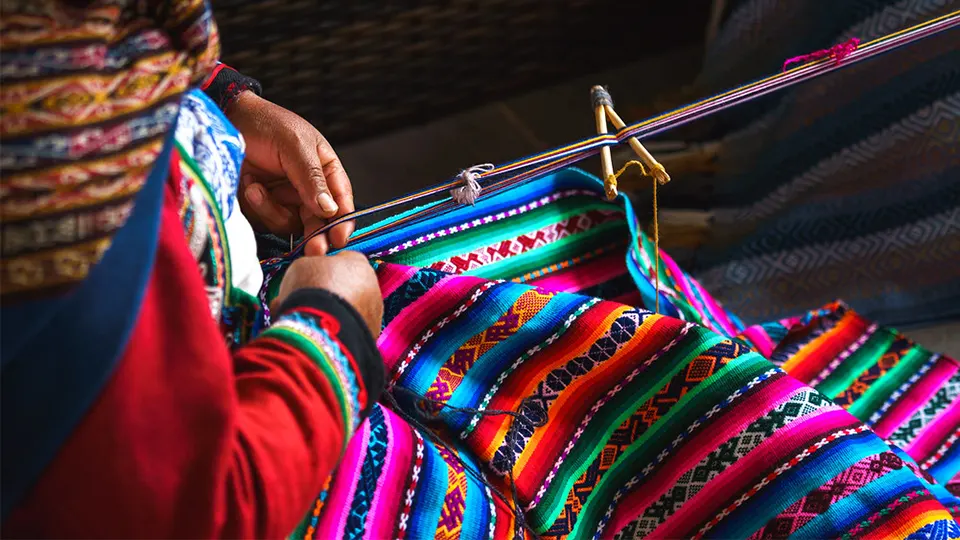
The colors and patterns found in traditional Peruvian textiles vary according to the community, weaving tradition, and cultural context. Rather than following a universal system of symbolism, these designs reflect local knowledge, identity, and artistic practices.
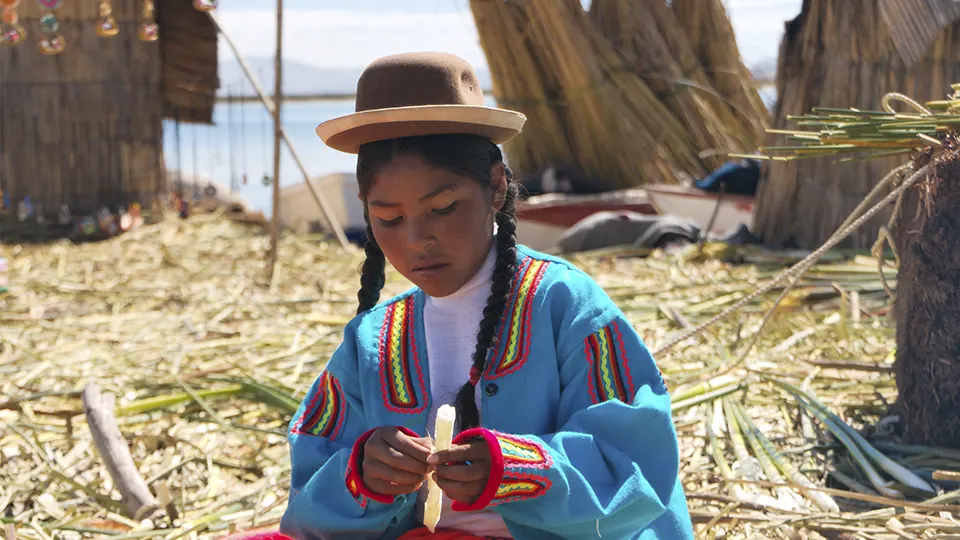
These differences and variations are primarily due to the geographical, climatic, historical, and cultural characteristics of each natural region. To understand them, one must consider the setting, location, and context in which the inhabitants live, as well as their respective traditional attire. Below are some notable differences regarding the clothing found in the main Peruvian regions:
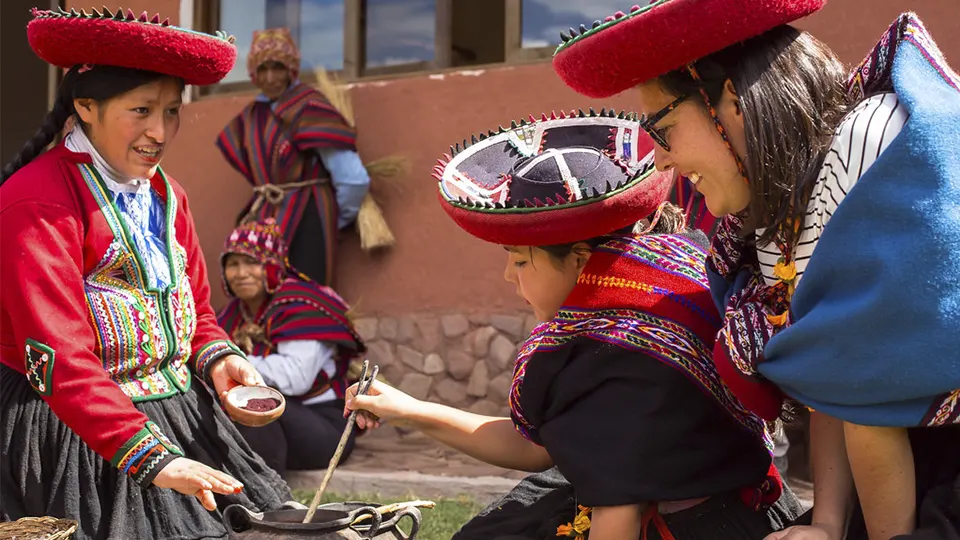
Visitors can encounter traditional clothing in several parts of Peru, particularly in Andean communities where these garments remain part of everyday life and cultural celebrations. However, clothing practices vary across the country, and traditional attire is not necessarily worn daily by everyone. Here are some of the best settings to discover these textile traditions:
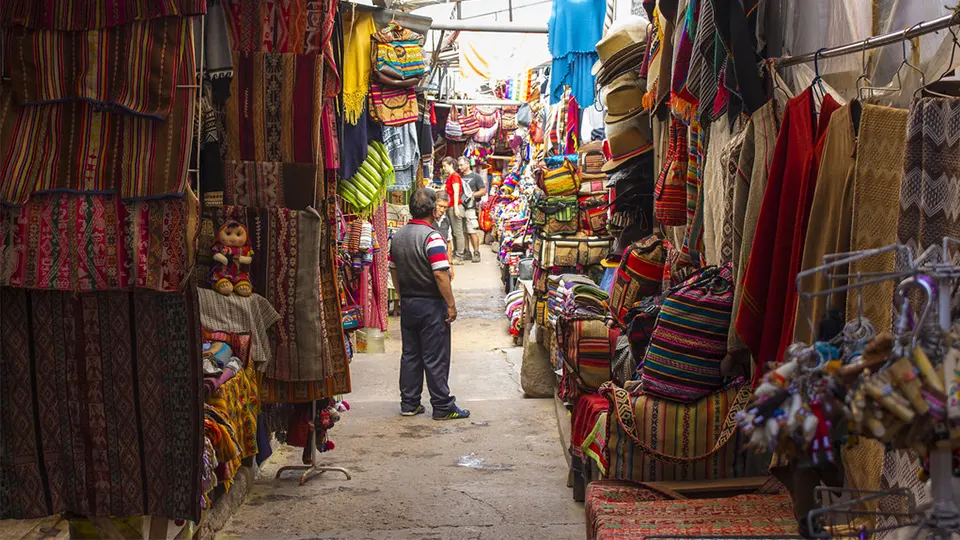
Across Peru, there are numerous places to purchase Peruvian clothing, ranging from specialized shops to more remote locations. When shopping for Peruvian textiles, look for sellers who can explain where their products come from, which materials they use, and how each piece is made. Buying directly from artisans or established weaving cooperatives can also provide a better understanding of the craftsmanship behind each textile. Below are some noteworthy places to consider:
Note: Consider the balance between the product’s price and the materials used to make it; some materials are more expensive than others. Be wary of offers that seem too inexpensive for a high-end garment.
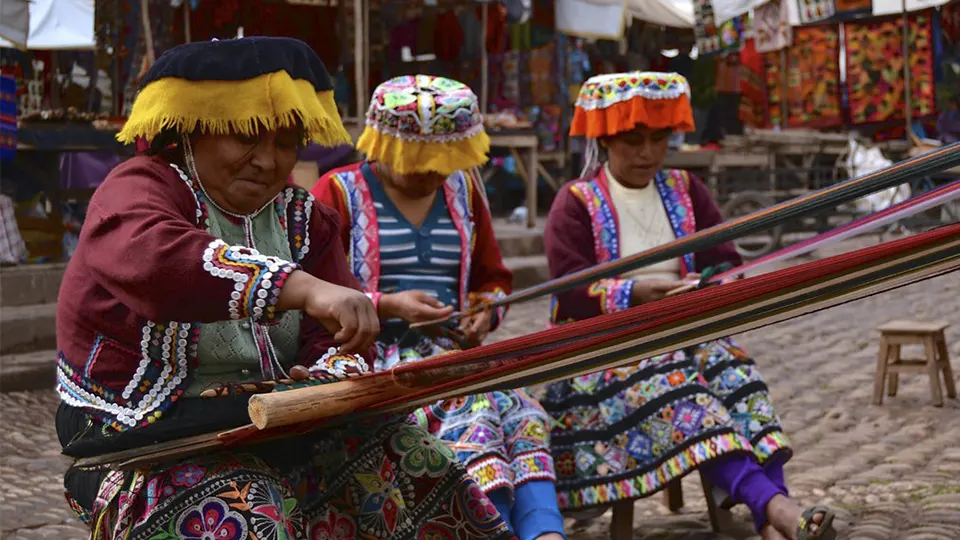
The poncho is one of the most recognizable pieces of traditional Peruvian clothing, particularly in the Andean region. Made from wool or other natural fibers, it often features distinctive regional patterns and colors. The chullo, a knitted hat with earflaps, is another well-known garment associated with the Peruvian Andes.
Yes. In some Andean communities, traditional clothing remains part of everyday life, particularly among women who wear polleras and men who wear ponchos or other regional garments. However, clothing practices vary considerably across Peru, and many people choose modern or contemporary styles for daily activities.
To identify genuine alpaca clothing, start by checking the fiber composition on the product label and asking the seller about the materials used. Genuine alpaca fiber is generally soft, lightweight, and warm, but texture alone cannot confirm its authenticity. When shopping, it is a good idea to visit trusted artisan stores or local markets, such as the Pisac artisan market, where you can ask sellers about the materials and how the garments are made.
No. Wearing a chullo or poncho is generally not considered disrespectful, as these garments are also commonly sold to visitors. The important distinction is to wear them respectfully, understand their cultural context, and avoid treating ceremonial clothing as a costume.
The price of a handwoven poncho in Peru varies depending on its fiber composition, weaving technique, design complexity, and the time required to make it. Pieces made from fine alpaca fiber or featuring intricate handwoven patterns generally cost more than simpler wool garments. Buying directly from artisans can also help you understand the craftsmanship behind each piece.
Andean women wear different types of hats for practical, cultural, and regional reasons. These accessories provide protection from the sun, rain, and cold while also reflecting local clothing traditions. Their shapes, colors, and decorative details can vary between communities and may serve as expressions of regional identity.
Traditional Peruvian clothing offers a fascinating glimpse into the country’s cultural heritage, particularly in the Andean region. From colorful polleras and woven llicllas to distinctive chullos and ponchos, each garment reflects a combination of craftsmanship, local traditions, and everyday life. Together, these pieces reveal the cultural diversity that makes Peru such an interesting destination to explore.
Beyond their appearance, traditional garments carry stories connected to community identity, regional history, and generations of textile knowledge. Discovering these traditions firsthand, whether in rural villages, local festivals, or artisan weaving centers, provides a deeper understanding of the people and cultures behind them.
If you are planning a trip to Peru, exploring its textile traditions can become a meaningful part of your journey. At Cusco Peru Travel, we can help you discover the country’s cultural heritage through thoughtfully designed travel experiences and visits to local communities. Contact us and let our travel specialists help you plan your next adventure in Peru.
